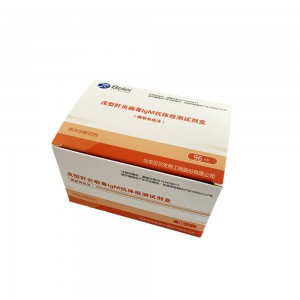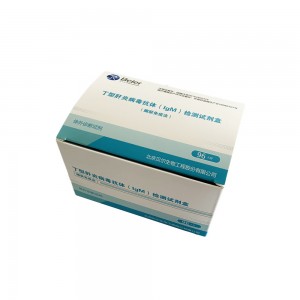
Hepatitis E virus IgG (HEV-IgG) ELISA Kit

Short Description:

Hepatitis E virus (HEV) is a non-enveloped, single-stranded, positive-sense RNA virus belonging to the Hepeviridae family. It is primarily transmitted via the fecal-oral route, often through contaminated water sources or undercooked animal products (particularly pork or wild game in zoonotic genotypes). The first documented large-scale outbreak of hepatitis E was reported in New Delhi, India, in 1955-1956, associated with water contamination. HEV infection is endemic in many developing regions, including parts of Asia, Africa, the Middle East, and Latin America, where genotypes 1 and 2 predominate and cause waterborne epidemics. In developed countries, cases are typically sporadic, often linked to genotypes 3 and 4 through zoonotic transmission, and primarily affect travelers returning from endemic areas, immunocompromised individuals, or those exposed to undercooked meat.

Clinically, HEV infection resembles hepatitis A, presenting as an acute, self-limiting illness in most cases, with symptoms including jaundice, fatigue, nausea, and elevated liver enzymes. However, among all viral hepatitides, HEV has the highest overall case fatality rate, ranging from 0.5% to 3% in the general population, predominantly affecting young adults. The infection poses the greatest risk to pregnant women, particularly in the third trimester, where mortality can reach 15-25% due to fulminant hepatic failure, and it may also lead to adverse fetal outcomes such as preterm delivery or intrauterine death. Chronic HEV infection can occur in immunocompromised patients, leading to progressive liver disease.

Following HEV infection, the immune response involves the production of anti-HEV antibodies. Anti-HEV IgG antibodies typically appear 2-6 weeks after symptom onset, following the initial IgM response, and persist for many years or lifelong in most individuals. They serve as a serological marker of past resolved infection or acquired immunity, conferring protection against reinfection with the same genotype, though cross-genotype immunity may be incomplete. Detection of anti-HEV IgG is valuable for epidemiological surveys, assessing seroprevalence in at-risk populations (e.g., blood donors, travelers, or pregnant women), confirming prior exposure in symptomatic patients, and evaluating vaccine-induced immunity where available. While protective immunity post-infection is generally robust but not always permanent, no universally licensed HEV vaccine is available globally (though recombinant vaccines like Hecolin are approved in some countries, such as China). Prevention primarily relies on interrupting fecal-oral transmission through improved sanitation, safe water supplies, and proper food handling practices.


Product Detail

Product Tags

Principle:

This kit employs the indirect enzyme-linked immunosorbent assay (ELISA) principle to detect hepatitis E virus IgG antibodies (anti-HEV IgG) in human serum or plasma samples. The polystyrene microwell strips are pre-coated with recombinant hepatitis E virus antigens. Upon addition of the serum or plasma specimen, any anti-HEV IgG antibodies present in the sample bind specifically to the immobilized antigens, while unbound components are removed by washing. In the subsequent step, horseradish peroxidase (HRP)-conjugated mouse anti-human IgG antibodies are added, which bind to the captured human IgG. Following another wash to remove unbound HRP conjugates, a chromogenic substrate (TMB) is added to the wells. In the presence of the antigen - anti-HEV IgG - HRP-anti-human IgG immunocomplex, the HRP enzyme catalyzes the substrate reaction, producing a blue color that is proportional to the concentration of anti-HEV IgG. The reaction is halted by adding a stop solution (typically 50 μL per well), which shifts the color to yellow. The absorbance (optical density) is then measured using a microplate reader at the appropriate wavelength (e.g., 450 nm, with a reference wavelength of 620-690 nm if required) to determine the presence and level of anti-HEV IgG antibodies in the sample.

Product Features:

High sensitivity, specificity and stability

Product Specification:

Principle Enzyme linked immunosorbent assay
Type Indirect Method
Certificate NMPA
Specimen Human serum / plasma
Specification 48T / 96T
Storage temperature 2-8℃
Shelf life 12 months

Ordering Information:

Product name Pack Specimen
Hepatitis E virus IgG ELISA Kit 48T / 96T Human serum / plasma

  • Previous:
  • Next:

  • Related Products